
dBase: 1979-2026
Litigation, neglect killed dBase. The dBase newsgroup servers went off-line since November 2025. Court-smart dBase vendors and AI accelerated the fall.

While the official dBase.com LLC’s website is still on-line, its newsgroups have been off-line since November 2025.
For those still trapped in its ecosystem, there is finally an escape route: AI powered migrations.
1979-1995: Legacy dBase years
Years ago, dBase was the undisputed king of databases - every business, every person using IBM or IBM-compatible PCs had to get it installed.
But instead of innovating to remain the best database in the face of competition, former Ashton-Tate CEO Ed Esber decided to litigate. Lawsuits designed to protect “look and feel” copyrights had a massive, chilling effect on the dBase community1.
Ashton-Tate targeted its own unsuspecting customers with “piracy audits”, and ask them to pay extra fees for licenses. External consultants were given sales quotas for official dBase consultant status - a predatory practice that was unthinkable in an era when software development cycles took years.
dBase customers pushed back, asking the obvious questions: When is a Novell NetWare-compatible server coming? When are we getting a network-aware UNIX dBase server?
Competitors answered. FoxBase released FoxPro UNIX server in 19932. Btrieve release their Novell-compatible servers in 19943.
Public humiliation and years of harassment by rent-seeking vendors destroyed developer trust long before the bugs began piling up.
1995-2012: dBase for Windows era and BDE
When dBase for Windows arrived, it came with three competing systems:
Paradox for Windows
C++ low-level ISAM methods (TurboPascal Database Toolbox, Turbo C++ ISAM) and
A cottage of smaller vendors (BTree Filer/NexusDB), CodeBase (now open-source), Sequiter, Halycon were DPMI compatible.
Bizarrely, to protect dBase, there was no compatible Turbo C++ objects integration in dBase (you could import OBJ files from Microsoft C++). There was no way to natively use dBase from Turbo C++ or TurboPascal.
Borland did ship Paradox SDK which uses OVL (overlay) and DLL. When Borland Delphi 1.0 came out, they provided access via BDE, an 5- or 6- floppy disk installation routine.
1996: dBase Source Code Lost
It is believed that - alongside the BOLD source code (missing for more than 10+ years), the BDE and many original dBase source code was lost during the ill fated Borland + Corel merger (which was eventually called off).
The reason why its considered lost - when Borland sold Borland Office pack - Borland WordPerfect, Borland Paradox to Corel4, it kept the same BDE version from 2001. Download Corel Paradox 2026 and… you’ll see nothing changed from since 20015.
Microfocus brought Borland SCM, Borland Server, Borland legacy products. If you license Microfocus legacy SCM products, you install Borland legacy Database Engine (MDE) that includes legacy POJO (Plain Old Java Objects) and COBOL interoperability to dBase.
Meanwhile, the dBase III and IV file format became the default format for GIS systems and import/exporting from IBM mainframes, keeping the data format alive even as dBase market-share declined.
2012-2019: The Pension Money Hostage Situation
In 2012, dBase was hived off from Borland and divested to dBase LLC. dBase LLC released dBase 9, moving to Visual C++ and CodeJock to replace Borland's aging Object Windows Library (OWL).
However, from dBase 8 all the way through dBase 12+, they never removed BDE. The BDE runtime included files timestamped from 1998. After 2019, meaningful development effectively stopped.
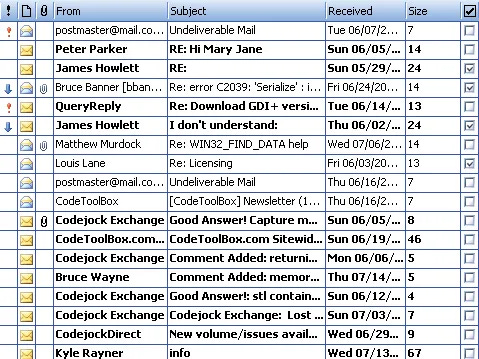
As the platform decayed, dark patterns emerged:
dBase third-party vendors refused to provide source code for their add-ons, shipping them as compiled binary files and trapping enterprise customers on MS-DOS, 16-bit, or 32-bit Windows. dBase third-party vendors continued selling “software assurance” or subscriptions for non-existent upgrades.
If you contacted them for support, you were ignored. If you complained about bad products, it was “the customer’s fault.” When frustrated businesses tried to file lawsuits, they found that these court-smart vendors had hidden behind shell LLCs and fake PO Boxes.
As the years flew by, many of these developers simply retired. They closed their websites, changed their legal names (who reads public newspaper notices anyways?), cashed their final subscription checks, and rode off into the sunset, leaving businesses stranded high and dry.
New discovery: AI Reads dBase Object Code
As Gen Z developers attempt to migrate 16-bit Clipper, FoxPro, or dBase to modern platforms, something incredible has happened.
The latest frontier AI models reads .PRG code It can parse all the way down to 16-bit dBase, FoxPro and Clipper .NTX files.
By feeding legacy PRG (circa 1985) and logics to models like Claude, ChatGPT, developers can now instruct the AI to translate decades-old dBase PRG directly into memory-safe Rust, highly concurrent Go, or modern Dart/Flutter cross-platform applications.
Rest in Peace, dBase. I hardly knew thee.
You sided with third-party vendors, causing life-long customers to get their reputations ruined on the former Borland newsgroups.
These same vendors prioritized their own pension over the survival of the ecosystem. They locked the doors from the inside and threw away the key. Now, decades later, artificial intelligence has arrived to finally cut the locks.
We aren't here to revive you; we are just here to help the survivors get out.
dBase FB response
An official dBase response on dBase FB page.
https://delphinightmares.substack.com/p/dbase-fb-response?r=2wau0y
I did dBase back in the days, then moved to Clipper, which was awesome, I don't think if I still remember enough to write such ancient code, but I certainly loved this post, and the trip down memory lane.